Published:
You look in the mirror and your face looks flat. Your cheeks have lost their fullness, your temples look sunken, and you look tired even after a full night's sleep.
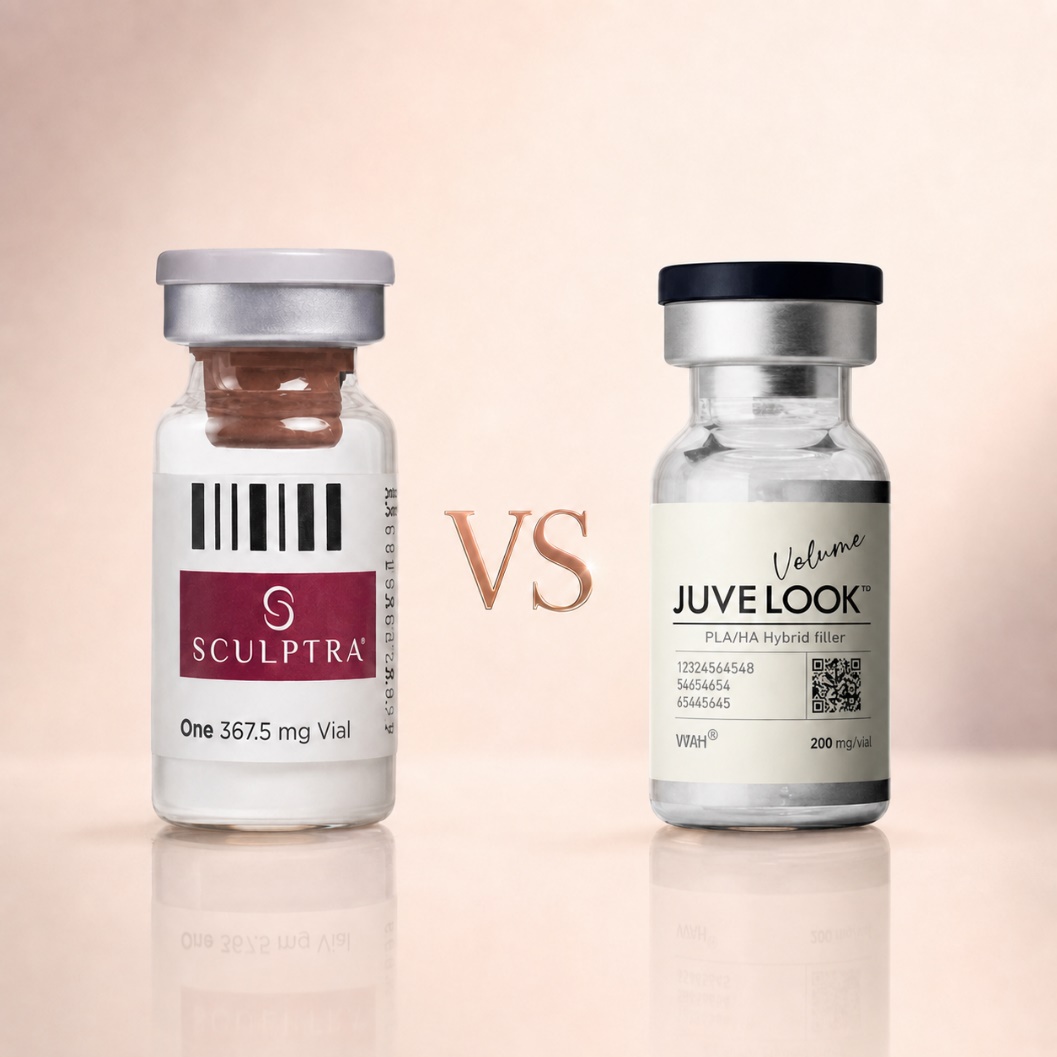
Two collagen treatments dominate Seoul clinics for this. Sculptra is the original, made of PLLA. Juvelook Volume is a Korean product made of PDLLA with hyaluronic acid.
They chase the same goal through different materials. This guide compares ingredients, target areas, results, duration, and cost. By the end you will know which one fits your face.
The difference is particle shape and chemistry, and everything else follows from it.
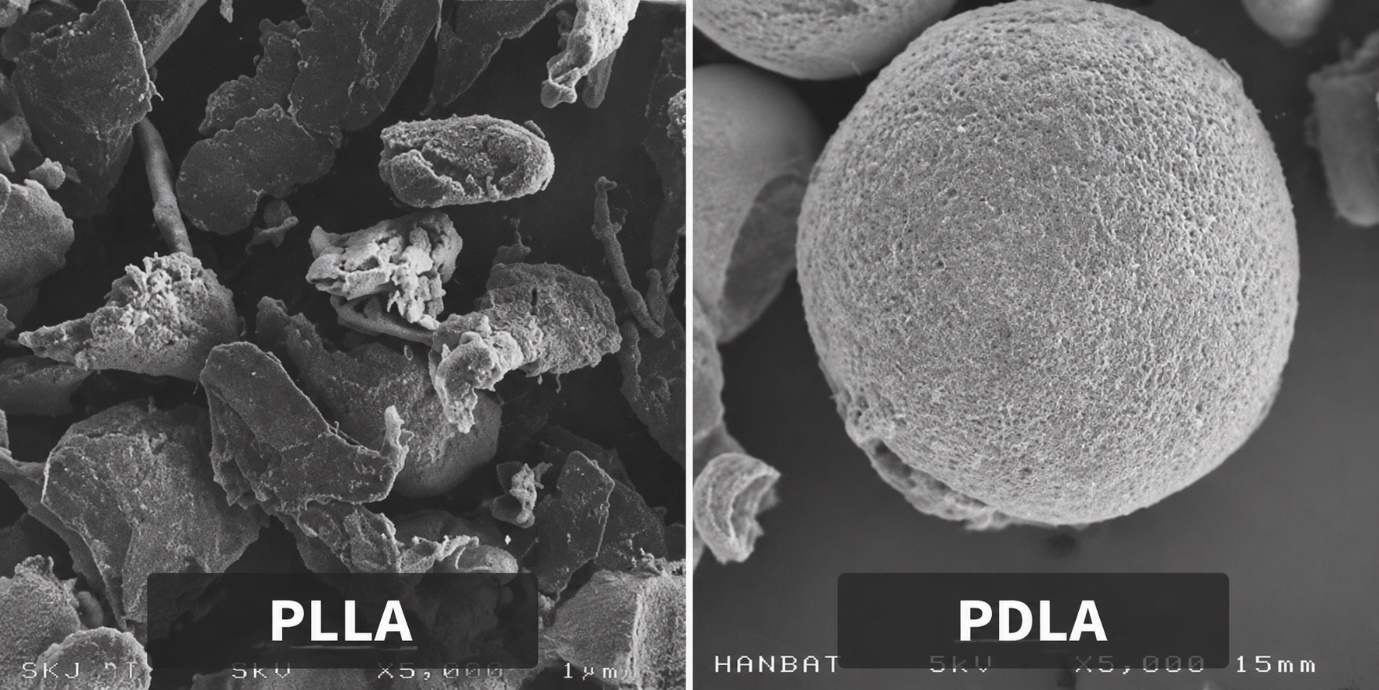
Sculptra is poly-L-lactic acid, or PLLA. It uses only one form of lactic acid, so its particles pack tightly. The result is hard, angular particles that stimulate a strong collagen response.
Juvelook Volume is poly-D,L-lactic acid, or PDLLA. It mixes both forms of lactic acid, so the particles cannot form neat crystals. They end up round, smooth, and sponge-like inside.
Round particles spread more easily and irritate tissue less. That is the core safety advantage of PDLLA.
Juvelook Volume also carries non-crosslinked hyaluronic acid. That gives some mild, immediate hydration and softness on day one.
| Sculptra | Juvelook Volume | |
|---|---|---|
| Main material | PLLA | PDLLA + non-crosslinked HA |
| Particle shape | Angular, dense, larger | Round, smooth, porous |
| How it's sold | Full vial only | Vial or per cc |
| Best for | Broad, whole-face volume loss | Local areas and fine correction |
| How long it lasts | About 24 months, sometimes longer | About 18 to 24 months |
| Lump risk | Moderate; technique-dependent | Clearly lower, but not zero |
| US FDA status | Approved | Not cleared |
Choose Sculptra when the volume loss is broad and you want the longest result.
Sculptra rewards scale. Treating a full face is where its cost and strength make sense.
Choose Juvelook Volume when the area is smaller, or when lump risk worries you most.
It can be used in smaller amounts, so it is an easier first step. You can treat one area without committing to a full-face plan.
Juvelook Volume costs clearly less per vial than Sculptra.
| Product | Unit | Seoul (Gangnam) price range, excluding VAT |
|---|---|---|
| Sculptra | 1 vial | ₩649,000 – ₩990,000 |
| Juvelook Volume | 1 vial | ₩300,000 – ₩540,000 |
These are Gangnam-area ranges as of 2026-08. Both products usually need 2 to 3 sessions, spaced about 4 weeks apart.
Compare total plans, not single sessions. A shorter-lasting product treated more often can cost more over three years.
Outside Korea, patients treat this as a choice between two products. In Gangnam clinics, it is treated as a design problem.
One face is not uniform. Skin thickness, fat loss, and bone support differ from your temples to your chin. So the right material can differ by area, on the same face.
That is why experienced injectors often use both. They build broad structure with one material, then refine smaller zones with the other. "Which is better" is the wrong question. "What does each part of my face need" is the right one.
Neither plan works without the right hands, though. Both products depend on correct mixing, depth, and even spreading. A skilled doctor is how you get the result you want while keeping side effects, including nodules, as low as possible.
So the first decision is not the product. It is who examines your face and designs the plan.
You can compare materials and prices on your own. This guide covers that part.
What you cannot judge from abroad is your own face. Whether your loss is broad or local, how thick your skin is, and how much product you actually need are clinical calls. Photos on your phone will not answer them, and neither will a price list.
That is where SSC helps. Send your photos and your goal, and we will tell you what a treatment plan review would likely recommend. You will also get a shortlist of verified Seoul clinics experienced with both products.
A. Both look natural, because both build your own collagen slowly. Neither creates the puffy look people fear from filler. The difference is scale, not naturalness. Sculptra suits broad restoration, and Juvelook Volume suits finer, local work.
A. No. Juvelook Volume is approved in Korea and CE-certified in Europe, but it is not cleared by the US FDA. Some marketing pages claim otherwise, so check carefully. This is one reason patients treat it during a Korea trip.
A. No, the materials are genuinely different. PDLLA particles are round and porous, while PLLA particles are angular and dense. That changes lump risk, spreading, and how long results last. Price is a result of those differences, not the difference itself.
A. Yes, and many Seoul patients do. Injectors often use one material for broad areas and the other for smaller zones. This should be planned by a doctor who examines your face. It is not something to design from a price list.
A. Downtime is short for both, so a few days is workable. But both need 2 to 3 sessions, roughly 4 weeks apart. Most international patients do one session per trip. Your clinic can plan the spacing around your travel.
A. Sculptra and Juvelook Volume are not rivals so much as different tools. One restores broad structure and lasts longest. The other is gentler, cheaper to start, and better for smaller areas. The right answer depends on where your volume went, and how much. SSC is a platform, not a clinic, so we have no product to sell