
Is Skin Botox Actually Botox? The Superficial Micro-Injection Secret to Glass Skin (Without the Frozen Face) — A Myeongdong, Seoul Guide (2026)
Published:
Intro
Skin Botox is not regular Botox. It goes into the skin's top layer, not the muscle. You can still smile and move your face normally. It shrinks pores and cuts oil instead.
If a Myeongdong clinic offered you "skin botox" or "microbotox," this guide explains what it does. You'll also learn 2026 prices and one safety risk worth knowing first.
Key Takeaways
- Skin Botox goes into the skin, not the muscle. Your face still moves normally.
- Results last about 3–4 months. That's shorter than regular Botox.
- Full-face prices in Myeongdong run about ₩100,000 to ₩500,000+ in 2026, depending on toxin brand.
- The main risk is smile asymmetry if the shot goes too deep near the mouth.
- "Pure toxin" brands like Xeomin and Coretox lower your risk of building resistance.
What Is Skin Botox?
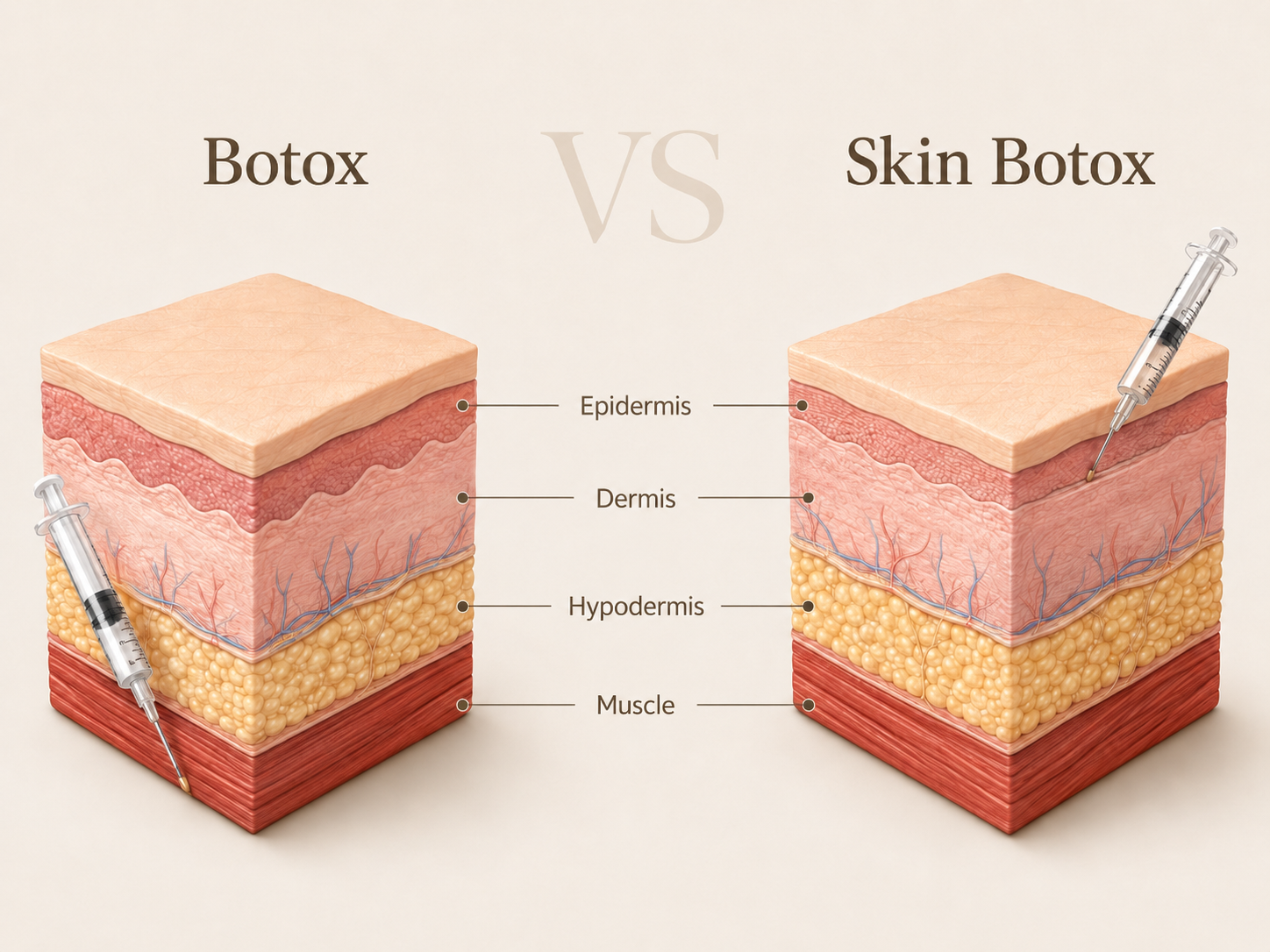
Skin Botox uses the same toxin as regular Botox. But it's diluted and injected shallow, just under the skin. Regular Botox freezes one muscle to stop a wrinkle. Skin Botox instead reaches oil glands and sweat glands near the surface. People choose it to shrink pores, cut shine, and get smoother, glowing skin.
Why Do People Choose Seoul for This?
- Korean clinics perform this treatment often, so techniques are refined.
- The method was developed and heavily improved by Korean doctors.
- Pain-reducing injector machines became common here early.
- Korea makes its own toxin brands, so prices vary widely.
- Myeongdong and Gangnam have many clinics close together, easy to compare.
- Clinics often run sales, so posted prices change often.
How It Changes Your Skin
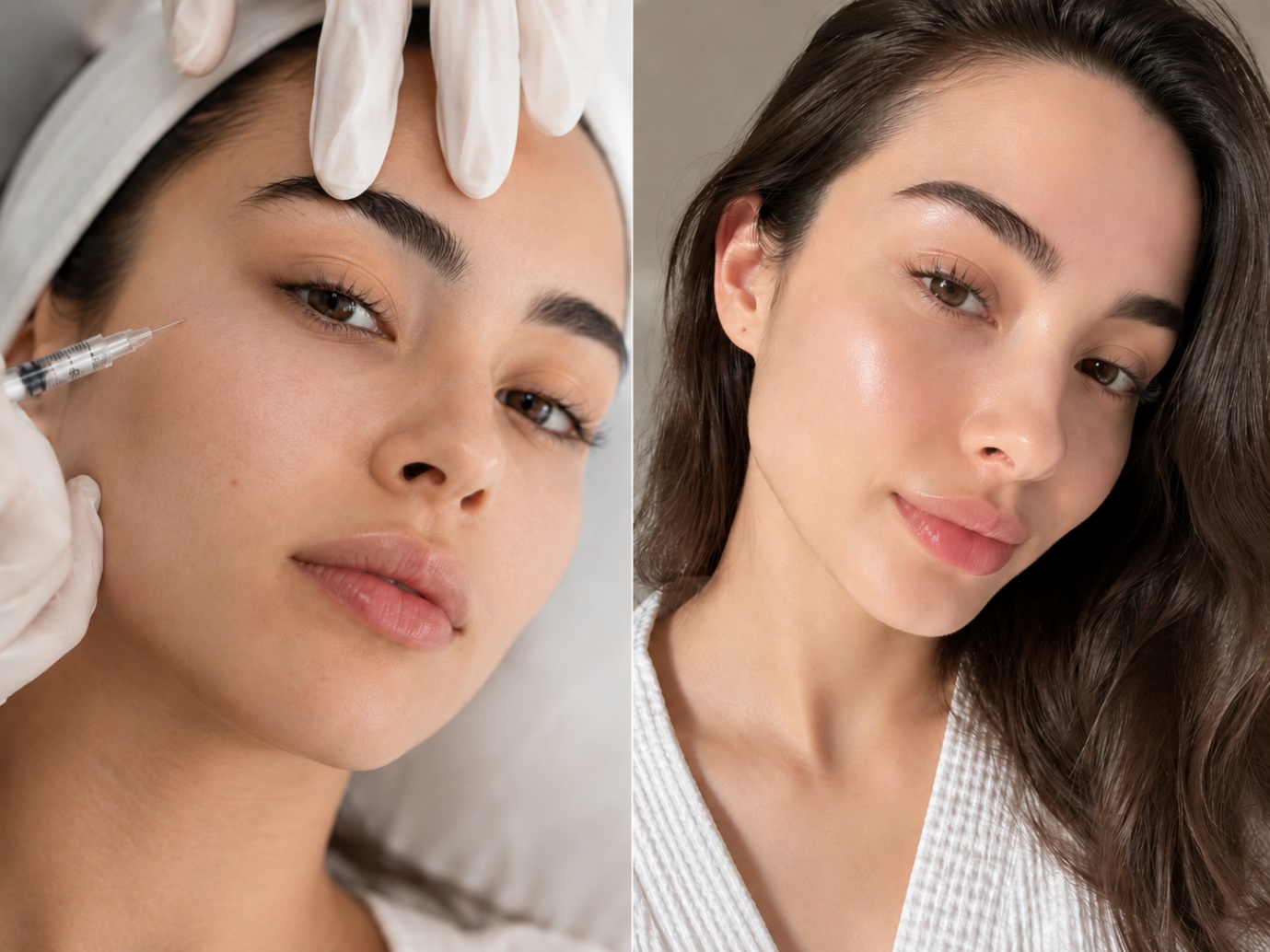
Smaller pores, less oil. The toxin blocks nerve signals that trigger sweat and oil. One study found it beat topical treatment for shrinking wide pores.
A mild lift. It relaxes tiny muscle fibers near the surface. This smooths fine lines without touching deeper muscles.
The "glass skin" glow. The toxin slightly slows fluid drainage under your skin. This causes gentle, even swelling that smooths the surface. Combined with tiny needle pricks (which boost collagen), skin looks brighter for 3–4 months.
How the Injection Works
Clinics measure two different things: how much liquid, and how strong it is.
Total volume (cc). This is what clinics usually list in their price menu. One area (like your V-line or forehead) usually uses about 1cc. Full face usually uses about 2cc. Face and neck together, or combo treatments with boosters, can go up to 4cc.
Strength (concentration). Within that volume, clinics adjust how strong the mix is, based on your goal:
| Goal | Concentration | Used For |
|---|---|---|
| General face | 20 units per mL | Pores, oil, texture |
| Fine lines | 24 units per mL | Crow's feet, sweating |
| Thick skin/neck | 28 units per mL | Jawline, scars |
A full face (about 2cc) needs 30–60 injection points. Face and neck together may need 200–500+ points. Exact volume and ratios vary by clinic.
HydroToxin combo. Some clinics mix in hyaluronic acid for faster hydration. One study found over 50% less skin roughness with this mix.
2026 Myeongdong Prices by Toxin Brand
Price depends almost entirely on which toxin is used, not the clinic. One area (about 1cc) means a zone like your V-line, nose, forehead, or under-eye. Full face (about 2cc) means the whole face.
| Toxin | One Area | Full Face |
|---|---|---|
| Domestic (general) | ₩30,000–60,000 (event pricing can drop lower) | ₩100,000–150,000 |
| Coretox (Korean pure toxin) | ₩40,000–100,000 | ₩150,000–200,000 |
| Xeomin (imported pure toxin) | ₩80,000–150,000 | ₩240,000–380,000 |
| Allergan (original Botox) | ₩150,000–250,000 | ₩380,000–500,000+ |
Based on a sample 2026 Myeongdong clinic price list. Confirm current pricing directly, since clinics run frequent promotions.
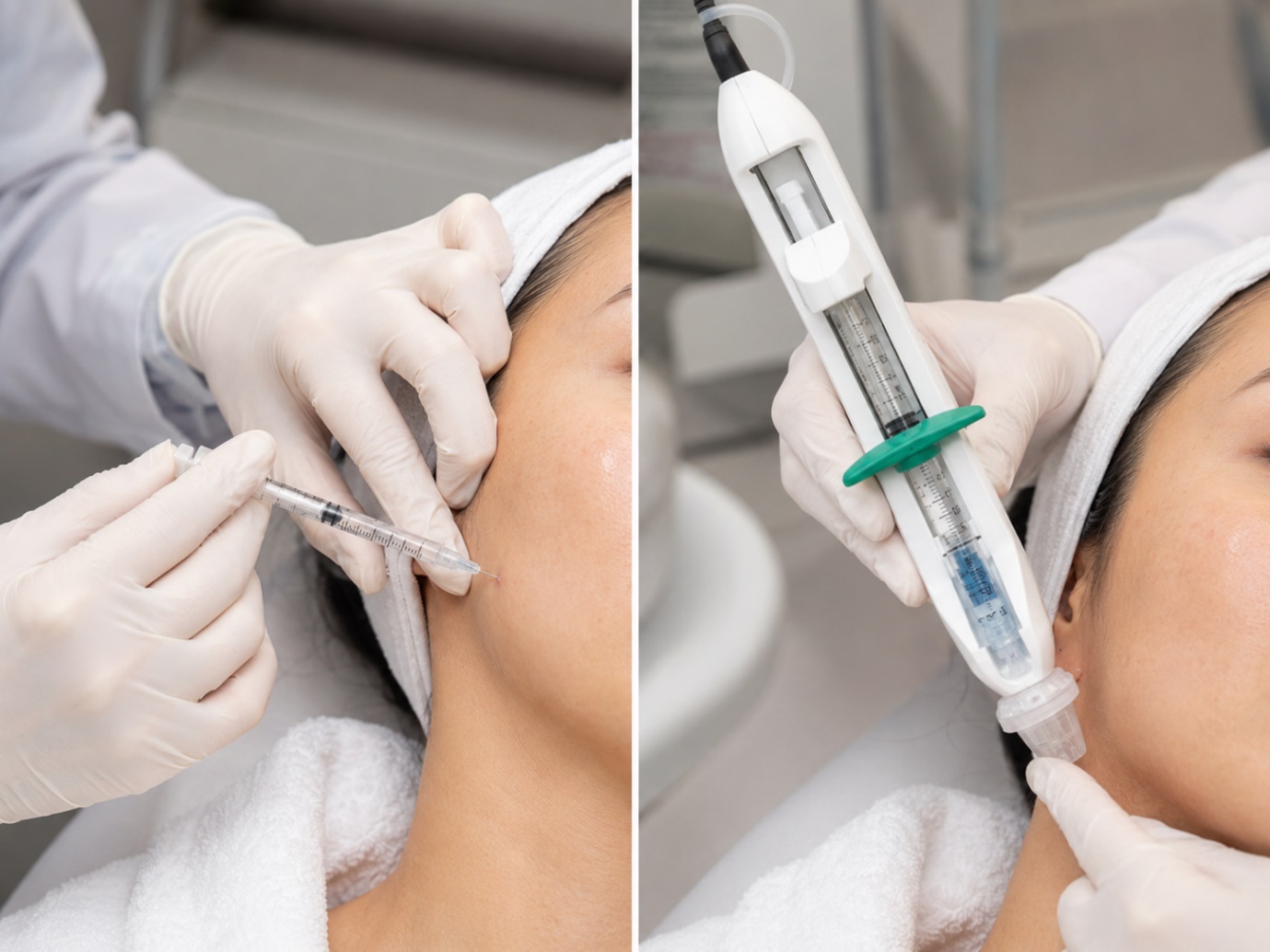
Hand Injection vs. Machine Injection
| Factor | Hand | Machine |
|---|---|---|
| Pain | High | Lower, machine spreads out the pain |
| Product waste | Very low | Can leak on curved spots |
| Depth control | Fully customized | Fixed depth |
| Swelling after | Bigger, lasts 2–4 days | Smaller, gone in a day |
| Best for | Max precision | Less pain, faster recovery |
Neither is "better." It's a trade-off between control and comfort.
Recovery Timeline
- Small bumps right after treatment are normal. They mean the shot hit the right layer.
- With thick boosters mixed in, bumps last 4–7 days.
- With toxin alone, bumps often fade in 3–4 hours.
- Skip face massage and gua sha for 1–2 weeks. Pressure can push toxin too deep.
- Avoid saunas, hot baths, alcohol, and hard workouts for a week.
- Numbing cream and cold packs are standard. Gas sedation is optional for pain.
Mistakes Foreign Patients Make
- Not confirming English support before booking, then struggling to communicate during the actual injection.
- Assuming the quoted price already includes tax — VAT (10%) is often billed separately.
- Not asking which toxin brand you're getting, since price menus can be hard to compare without a translator.
- Not planning aftercare before flying home, in case your results look uneven.
Checklist Before You Book
- Confirm if English support will be there during the actual treatment, not just at reception.
- Confirm the total price, including tax (VAT) and any add-on fees.
- Ask which toxin brand you're getting — domestic, Coretox, Xeomin, or Allergan.
- Ask what aftercare support is available once you're back home.
Insider Insight: Why Myeongdong Prices Vary So Much
Myeongdong quotes range from ₩30,000 for a small area to over ₩500,000 for full-face with premium toxin. The real reason isn't clinic quality. It's the toxin brand: domestic, Coretox, Xeomin, or original Allergan. The biggest price jump happens between these brands — even at the same clinic. If a quote doesn't name the toxin brand, that's your biggest red flag.
Want Advice Specific to Your Case?
This guide covers the basics everyone should know. But your skin, your budget, and a fair price for your case need a real look, not a general guide.
The Contour Journal - SSC offers a free price check. Send your goal and a few photos. Get a fair price range and a clinic shortlist in 48 hours, free. → contact
FAQ
Q. What does skin botox actually do?+
A. It shrinks pores and cuts oil. It does not stop you from moving your face.
Q. Is it safe?+
A. Yes, when done by a trained injector. The main risk is asymmetry if the shot goes too deep near the mouth.
Q. How much does it cost in Myeongdong?+
A. In 2026, one area (like the nose or jawline) runs ₩30,000–250,000, and full face runs ₩100,000–500,000+, depending on the toxin brand — domestic, Coretox, Xeomin, or original Allergan.
Q. How long do results last?+
A. About 3–4 months. Bumps from the shots fade within a day, sometimes up to a week.
Q. Will my face look frozen?+
A. No. That's the whole point of this technique. Risk is mostly limited to the lower face if depth is off.
Q. Is English support available?+
A. It depends on the clinic. Always confirm this before you book.
Q. What about aftercare after I fly home?+
A. Skip massage, heat, and alcohol for a week. Contact your clinic if anything looks uneven.
Q. How does a consult with The Contour Journal - SSC work?+
A. Send your goals and photos. Get a price range and clinic shortlist in 48 hours, free.
Planning Skin Botox in Korea?
Myeongdong's price range comes down to one thing: which toxin you get. Now you know what to ask before you book. Want a shortcut? The Contour Journal - SSC can send a free price check and verified clinic shortlist in 48 hours. Reach out via email or phone or contact.
Last updated: 2026-07 ⚠ Add a medical reviewer before publishing.
Sources: PubMed split-face pore study · Aesthetic Surgery Journal roundtable · PMC/NIH microdroplet review · HydroToxin hydration study · Xeomin/Coretox manufacturer data · a sample 2026 Myeongdong clinic price list (br
Related Articles
 Factory vs. Boutique Clinics in Korea: Which One Fits You? (2026 Guide)→
 How to Make LDM Effects Last Longer in Korea (Hongdae, Seoul Guide, 2026)→
 How to Tell If a Gangnam Skin Clinic Has a Real Dermatologist→
 Lifting Treatments in Seoul, Gangnam: The Full Device Cheat Sheet Beyond Ultherapy and Thermage (2026 Guide)→
 Medical Tax Refund for Foreigners in Korea: What Changed and What Didn't (2026 Guide)→
 Rejuran Pain Relief in Korea: Anesthesia Options and Safety Tips (2026 Guide)→