
Potenza vs Sylfirm X in Korea — How to Pick the Right RF Microneedling for Your Skin
Published:
Potenza vs Sylfirm X in Korea — How to Pick the Right RF Microneedling for Your Skin If you've been comparing Potenza and Sylfirm X for a trip to Seoul, here's the part most clinic pages skip: neither one is "better" - they fix different problems, and picking the wrong machine is how people spend a treatment budget on skin that needed the other one. Korea runs both at high volume, which is exactly why choosing well matters. This guide breaks down what each device actually does, who it suits, what it costs in Gangnam right now, and how to tell which one fits your skin. Potenza vs Sylfirm X in Korea: Which RF Microneedling Is Right for Your Skin? (2026 Guide)
RF microneedling - radiofrequency microneedling, or MNRF - sends very fine needles into the deeper layer of your skin and then releases radiofrequency heat from those needles to remodel collagen, without burning off the surface the way older ablative lasers did. Potenza and Sylfirm X are the two devices Korean dermatology clinics reach for most when they do it.
Here's the honest version from someone who has sat in a lot of Gangnam consultation chairs: clinics tend to recommend whichever machine they own, so "which is better" is the wrong question to walk in with. The better question is "which one matches my skin problem?" This guide gives you that answer - the mechanism behind each device, the concerns each is built for, realistic Seoul price ranges as of July 2026, and a checklist so you can judge a clinic's recommendation instead of just trusting it.
Key Takeaways
- Both Potenza and Sylfirm X are FDA-cleared RF microneedling devices, but they target different skin problems.
- Potenza excels at deep acne scars, enlarged pores and oily skin - it rebuilds structure and can push skin boosters deep.
- Sylfirm X targets stubborn vascular melasma, facial redness and rosacea by repairing the skin's basement membrane.
- Rule of thumb: thick, scarred or oily skin leans Potenza; thin, reactive, easily-flushed skin leans Sylfirm X.
- A single full-face session in Gangnam typically runs 130,000-300,000 KRW as of July 2026; packages cost more.
What Is RF Microneedling?
RF microneedling is a hybrid treatment: it combines a physical injury with electrical heat. The needles create thousands of microscopic channels that trigger your skin's natural wound-healing response, while radiofrequency energy heats the dermis to roughly 40-60 degrees Celsius. That heat instantly contracts old, loose collagen (a short-term tightening effect) and, over the following weeks and months, drives fresh collagen and elastin production. Because the needles bypass the surface and work in the dermis, the risk of post-inflammatory pigmentation - a real concern for Asian and deeper skin tones - is far lower than with surface-ablating lasers.
It is most often chosen to smooth acne scars, shrink enlarged pores, firm lax skin, and - with the right device - settle stubborn pigment and redness that lasers alone can't fix.
Why Do So Many People Choose Korea for RF Microneedling?
- Sheer case volume: clinics in Gangnam and Myeongdong run these devices daily, so operators are highly practiced at tuning them.
- Fast adoption of new protocols - Korea popularized pairing RF microneedling with skin boosters and combination toning.
- Both leading devices are common in one city, so an honest, side-by-side recommendation is actually possible.
- A competitive market keeps single-session pricing inside a fairly predictable band.
- Experience with Fitzpatrick III-IV skin means settings are chosen to reduce pigmentation risk, not just maximize energy.
Potenza vs Sylfirm X at a Glance
The short answer is in the table; the detail is in the sections below it.
| Feature | Potenza (Cynosure) | Sylfirm X (Viol) |
|---|---|---|
| Core idea | Structural dermal remodeling + drug delivery | Basement-membrane repair + vessel/pigment control |
| RF modes | 4-mode: mono/bipolar at 1 & 2 MHz | Dual-wave (continuous + pulsed), 8 modes |
| Needle depth | About 0.5-3.5 mm (deep-capable) | 0.3-4.0 mm (can work very shallow, ~300 microns) |
| Best for | Deep acne scars, pores, oily/sebaceous skin, laxity | Vascular melasma, redness, rosacea, sensitive skin |
| Skin-booster delivery | Yes - pumping (CP) tip | Not its focus |
| Relative pain | Higher (deeper, higher energy) | Lower (shallow, gentle) |
| Typical downtime | ~3-5 days (more with boosters) | ~1-2 days |
| FDA status | Cleared (2020), first 4-mode RF device | Cleared, first dual-wave RF device |
When Potenza Wins
**Choose Potenza when the problem is structural - skin that has lost tissue or is thick and oily. **Deep boxcar and icepick acne scars, long-stretched vertical pores, and persistent sebaceous activity don't respond to gentle surface heating; they need depth and, often, something to fill the gap.
- Deep, pitted acne scars: an insulated tip fires concentrated heat into the lower dermis to break down stiff scar tissue.
- Enlarged pores and rough texture on thicker skin, treated with non-insulated tips over a broad area.
- Volume-loss scars where the pumping (CP) tip drives a collagen-stimulating booster such as Juvelook (PDLLA + hyaluronic acid) deep into the gap.
- Recurring cystic or nodular acne, where a single-needle tip can coagulate an overactive oil gland at the source.
When Sylfirm X Wins
**Choose Sylfirm X when the problem is reactivity - thin skin that flushes, or pigment that keeps coming back. **Its signature is a very shallow target, around 300 microns, right at the basement membrane that separates the epidermis from the dermis.
- Stubborn or vascular melasma that laser toning never fully clears - Sylfirm X repairs the collapsed basement membrane so pigment stops "leaking" into the dermis.
- Chronic facial redness and rosacea: pulsed-wave mode gently coagulates only the abnormal, dilated vessels at low temperature.
- Lingering red marks after acne, calmed without aggravating the surrounding skin.
- Thin, sensitive, easily-irritated skin barriers that can't tolerate high-energy, deep treatments.
What Patients in Korea Typically Choose
In practice, many Korean patients don't treat this as strictly either/or. If texture and scars are the main issue, they book Potenza with a skin booster. If the main issue is pigment or redness on delicate skin, they use Sylfirm X - often layered with toning lasers over a series - as a "barrier and pigment" foundation. Where both concerns exist, clinics commonly alternate or stage the two. The device follows the dominant concern; the combination follows the individual case.
Common Mistakes Foreign Patients Make
- **Picking by brand hype, not skin type. **The trending name isn't the right name for every face - match your concern to the mechanism.
- **Expecting one session to fix everything. **Both devices usually need 3-5 sessions to show their full result; a single visit is a start, not a finish.
- **Booking Potenza + booster right before the flight home. **Bruising and bumps can last several days - leave buffer days before travel or events.
- **Not mentioning melasma or rosacea. **The wrong device or setting can worsen pigment. Say it out loud in the consult.
- **Chasing the lowest sticker price. **Single-session prices look similar; the real cost lives in the package - tip type and booster volume.
- **Not asking which tips, modes and depth they'll use. **The settings, not the logo, decide your result.
How to Evaluate a Clinic's Recommendation: A Checklist
Worth saving before your consult. A good clinic will pass most of these without being pushed.
- Does the doctor examine your skin type and thickness and name your primary concern before naming a device?
- Do they specify the tip(s), the mode (monopolar/bipolar, continuous/pulsed) and the needle depth they'll use?
- For scars or pores: do they offer a pumping tip plus a named booster, and quote the booster volume in cc?
- For melasma or redness: do
Q. Do Korean clinics offer English support? A. Many Gangnam clinics offer some English, but it varies widely by clinic and by which staff member you get. An interpreter or a coordinator helps make sure nothing is lost in translation - especially the details of settings, expectations and aftercare.
Q. Can I get aftercare once I fly home? A. Yes, with a plan. The essentials are daily SPF, a gentle moisturizer, and avoiding sauna, heat and hard exercise for 1-2 weeks. Remote check-ins can catch anything that looks off and tell you whether it's normal healing or worth a local review.
**Send your main concern and a few photos, and you'll get a realistic local price range and a shortlist of verified options within 48 hours - free, no obligation. **[/contact · KakaoTalk / WhatsApp / WeChat / Email]
Related Articles
 Factory vs. Boutique Clinics in Korea: Which One Fits You? (2026 Guide)→
 How to Make LDM Effects Last Longer in Korea (Hongdae, Seoul Guide, 2026)→
 How to Tell If a Gangnam Skin Clinic Has a Real Dermatologist→
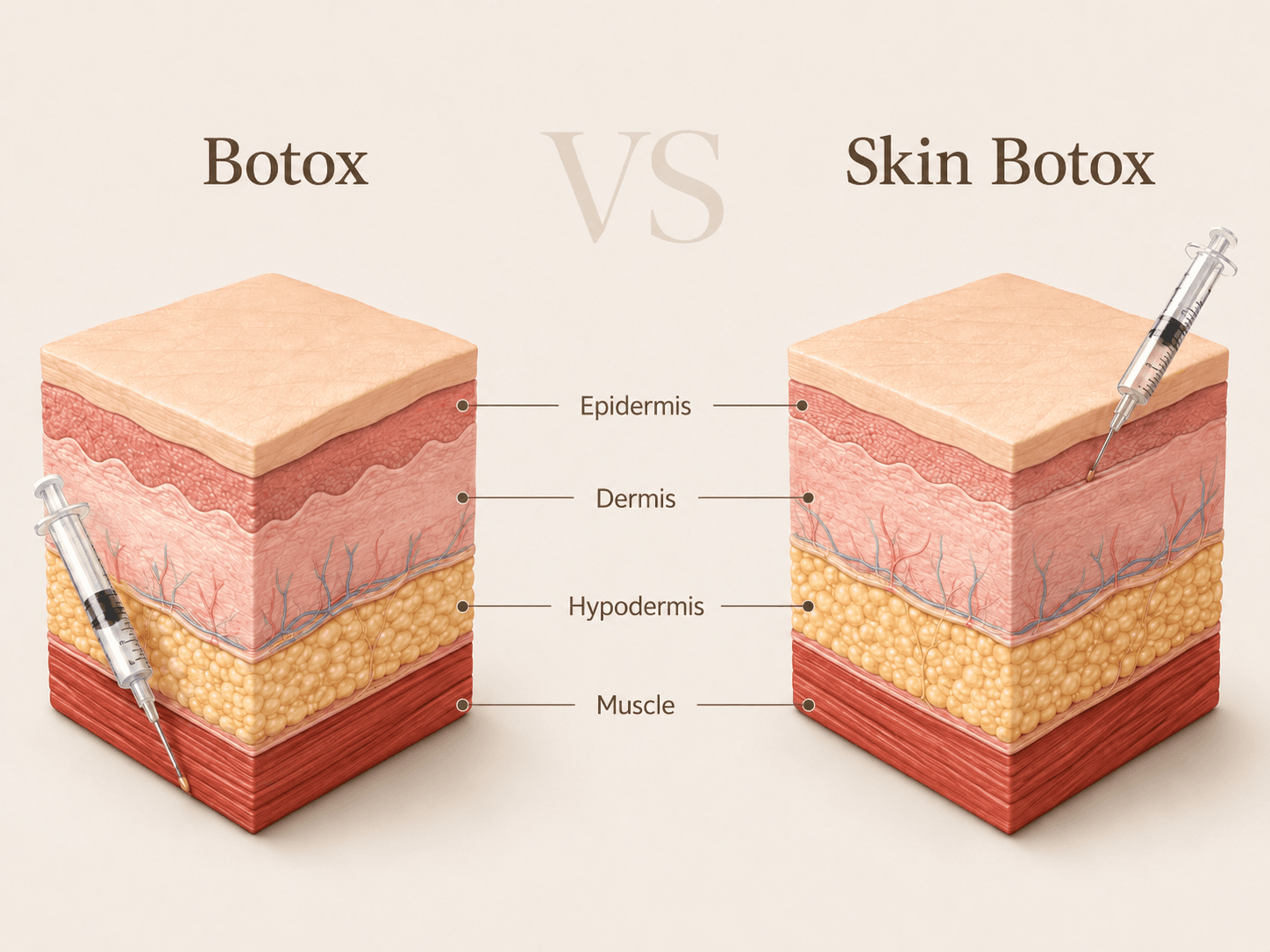 Is Skin Botox Actually Botox? The Superficial Micro-Injection Secret to Glass Skin (Without the Frozen Face) — A Myeongdong, Seoul Guide (2026)→
 Lifting Treatments in Seoul, Gangnam: The Full Device Cheat Sheet Beyond Ultherapy and Thermage (2026 Guide)→
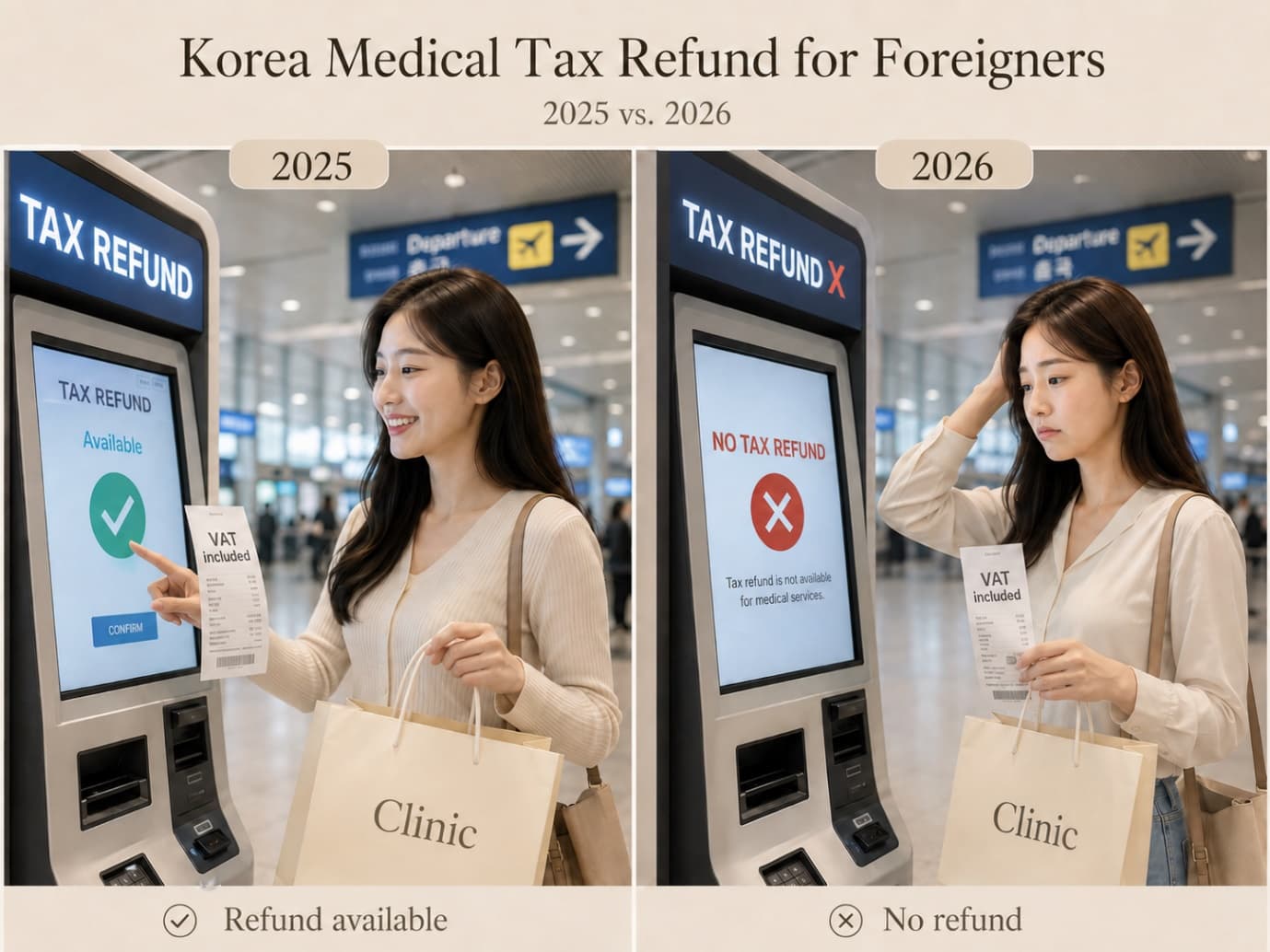 Medical Tax Refund for Foreigners in Korea: What Changed and What Didn't (2026 Guide)→