
Potenza RF Microneedling in Korea — The Honest Guide to Scars, Pores & Skin Boosters
Published:
Potenza RF Microneedling in Korea — The Honest Guide to Scars, Pores & Skin Boosters If your skin problem is a texture problem - deep acne scars, wide pores, oily skin that never quite settles - Potenza is probably the device you keep seeing recommended in Seoul. Here's what it actually does, which tips and boosters matter, how much downtime to expect, and what a fair Gangnam price looks like right now.
Potenza RF Microneedling in Korea: Acne Scars, Pores & Cost (2026 Guide)
Potenza is a radiofrequency microneedling device made by Cynosure. It sends fine needles into the deeper layer of your skin and releases radiofrequency heat from them to rebuild collagen. What makes it a favorite in Korean clinics isn't one trick - it's how many different problems a single machine can be tuned to solve, from stiff acne scars to enlarged pores to oily, breakout-prone skin.
This guide is written for the person deciding whether Potenza is the right treatment to fly for - or the right thing to say yes to in a Seoul consultation. It covers how it works, who it genuinely suits (and who should look at a gentler device), the tips and booster combinations that decide your result, a realistic timeline, and honest pricing as of July 2026.
Key Takeaways
- Potenza is an FDA-cleared, four-mode RF microneedling device built for structural skin problems.
- It's the strong choice for deep acne scars, enlarged pores, oily/sebaceous skin, and mild laxity.
- Its standout feature is the pumping (CP) tip, which drives skin boosters like Juvelook deep into the skin.
- It works deeper and hits harder than gentle devices, so expect more discomfort and ~3-5 days of downtime.
- Single full-face sessions in Gangnam run ~130,000-230,000 KRW; booster packages ~300,000-500,000+ KRW (as of July 2026).
What Is Potenza?
Potenza combines two things: microneedles and radiofrequency energy. The needles create thousands of microscopic channels that switch on your skin's wound-healing response, while radiofrequency heat - roughly 40-60 degrees Celsius in the dermis - instantly contracts old collagen and, over the following weeks, triggers new collagen and elastin. Because the energy is delivered below the surface, it can rebuild the deep structure of the skin while largely sparing the top layer, which keeps the risk of post-inflammatory pigmentation lower than surface-ablating lasers.
It is most often chosen to soften deep acne scars, shrink enlarged pores, calm oily skin, and - with a booster - refill the small pits that scars leave behind.
Why Do So Many People Choose Korea for Potenza?
- Korean clinics run RF microneedling in extremely high volume, so operators are fluent in tip selection and energy settings.
- Korea popularized the pumping-tip-plus-skin-booster approach, and combinations like Potenza + Juvelook are routine here.
- The competitive Gangnam market keeps single-session pricing in a predictable band.
- Clinics are experienced with Fitzpatrick III-IV skin and tune depth and energy to protect against pigmentation.
How Potenza Works
Two design features do most of the heavy lifting. First, four RF modes: monopolar or bipolar energy, at 1 MHz or 2 MHz. Monopolar 1 MHz spreads heat wide and deep for broad lifting and firmness; bipolar 2 MHz concentrates heat in a small zone for precise work like scars and fine texture. Second, the tips: Potenza has a large tip lineup, and the tip - plus the pulse width, meaning how long the energy fires - is what actually shapes the result. Short pulses on an insulated tip spike heat at one deep point to break down scar tissue; longer pulses on a non-insulated tip warm a broad area gently to refine pores and calm redness.
Who Potenza Is For - and Who Should Skip It
**A good fit: **thicker, oilier, more resilient skin with structural problems.
- Deep boxcar or icepick acne scars where tissue has been physically lost.
- Enlarged, stretched pores and rough texture that surface treatments haven't fixed.
- Oily, sebaceous, breakout-prone skin - including recurring cystic acne that a single-needle tip can target at the oil gland.
- Mild skin laxity alongside texture concerns.
**Look at a gentler device instead if: **your skin is thin and reactive, you flush easily or have rosacea, or your main concern is stubborn vascular melasma - those cases usually do better on Sylfirm X. Also postpone if you have an active infection or are pregnant, and always disclose melasma so settings can be adjusted.
The Tips That Matter (and What Each One Does)
- **Non-insulated (pore) tip: **energy spreads along the whole needle to refine pores, smooth texture and calm redness.
- **Insulated (scar) tip: **the shaft is coated so heat fires only at the tip - concentrated energy for deep scars and overactive oil glands.
- **Pumping (CP) tip: **opens micro-channels and uses vacuum pressure to push a skin booster into the dermis - the key to volume-loss scars.
- **Single-needle tip: **targets one oil gland at a time to coagulate stubborn, recurring cystic acne.
- **Tiger Tip (dual-depth): **treats two depths in one pass - surface texture and deep firmness together.
The Potenza + Juvelook Combination
This is the pairing you'll hear about most for acne scars. Deep pits can't be fully "heated" back into place - the tissue is gone, so the gap needs filling. The pumping tip opens channels with RF, then drives a collagen-stimulating booster into the dermis. The most common partner is Juvelook (PDLLA plus hyaluronic acid), which prompts your own collagen to build gradually. Because the booster is spread through many fine needles rather than injected in one spot, it tends to distribute more evenly, with less risk of lumps than manual injection. Studies of this general approach report much higher absorption of the active ingredient than simply applying it to the surface, and the collagen response continues over roughly 12-24 months. Where hydration is the main goal instead, a PN/PDRN booster such as Rejuran is used with the pumping tip.
Results Timeline: What to Expect and When
| When | What you'll notice |
|---|---|
| Days 0-5 | Redness, tiny needle marks, possible bruising or bumps if a booster was used - then it settles |
| Weeks 1-2 | Skin looks calmer; some early smoothing of texture and pores |
| Weeks 4-8 | New collagen becomes visible - pores tighter, scars softer, tone more even |
| Months 3-6+ | Peak remodeling; with Juvelook, gradual scar refill continues for up to 12-24 months |
Recovery & Downtime
Plan for a real, if short, recovery. Numbing cream is applied for 30-40 minutes before treatment, so the session itself is tolerable. Afterward, expect redness for a few days; with a booster, add tiny needle-hole marks, possible pinpoint bruising, and a briefly uneven surface as the product settles. Most people are camera-ready in about 3-5 days. For 1-2 weeks, skip sauna, hot yoga, hard cardio, alcohol and scrubs, and double down on SPF and moisturizer - the dermis has been heated and is temporarily dry and sensitive. A few small blemishes around days 2-3 are common and pass quickly.
Typical Cost in Korea (as of July 2026)
Prices below are typical Gangnam ranges and vary by clinic, area treated and booster volume.
| Package | Typical Gangnam price (VAT extra) |
|---|---|
| Potenza alone (pore/texture, non-insulated tip) | 130,000-230,000 KRW |
| Potenza + skin-booster pumping (Juvelook / exosome / PDRN) | 300,000-500,000+ KRW |
| Potenza single-needle for cystic acne | ~190,000-250,000 KRW per area/session |
Common Mistakes Foreign Patients Make
- **Booking Potenza + booster right before flying home. **Marks and bumps can last several days - leave buffer time.
- **Expecting one session to erase deep scars. **Scar work is a series of 3-5, with results building over months.
- **Not asking which tip and booster volume are included. **That's what the price actually buys - and what drives your result.
- **Choosing Potenza f
Insider Insight: Where the Potenza Price Really Comes From On a Gangnam price list, "Potenza" alone looks cheap - often 130,000-230,000 KRW. But almost nobody flies to Korea for Potenza alone; they come for scars and pores, and that means the pumping tip and a booster. That's where the number moves. A Juvelook package at 2cc costs very differently from 4cc, and exosome or PDRN add-ons stack on top. The single biggest driver of your final bill is booster volume, not the base session. Knowing the going rate for the base treatment versus each booster tier is what lets you tell a fair, complete quote from an inflated one - and match the volume to what your scars actually need. That's the local benchmarking we do.
Where Independent Research Stops Working
**Send your main concern and a few photos, and you'll get a realistic local price range and a shortlist of verified options within 48 hours - free, no obligation. **[/contact · KakaoTalk / WhatsApp / WeChat / Email]
Related Articles
 Factory vs. Boutique Clinics in Korea: Which One Fits You? (2026 Guide)→
 How to Make LDM Effects Last Longer in Korea (Hongdae, Seoul Guide, 2026)→
 How to Tell If a Gangnam Skin Clinic Has a Real Dermatologist→
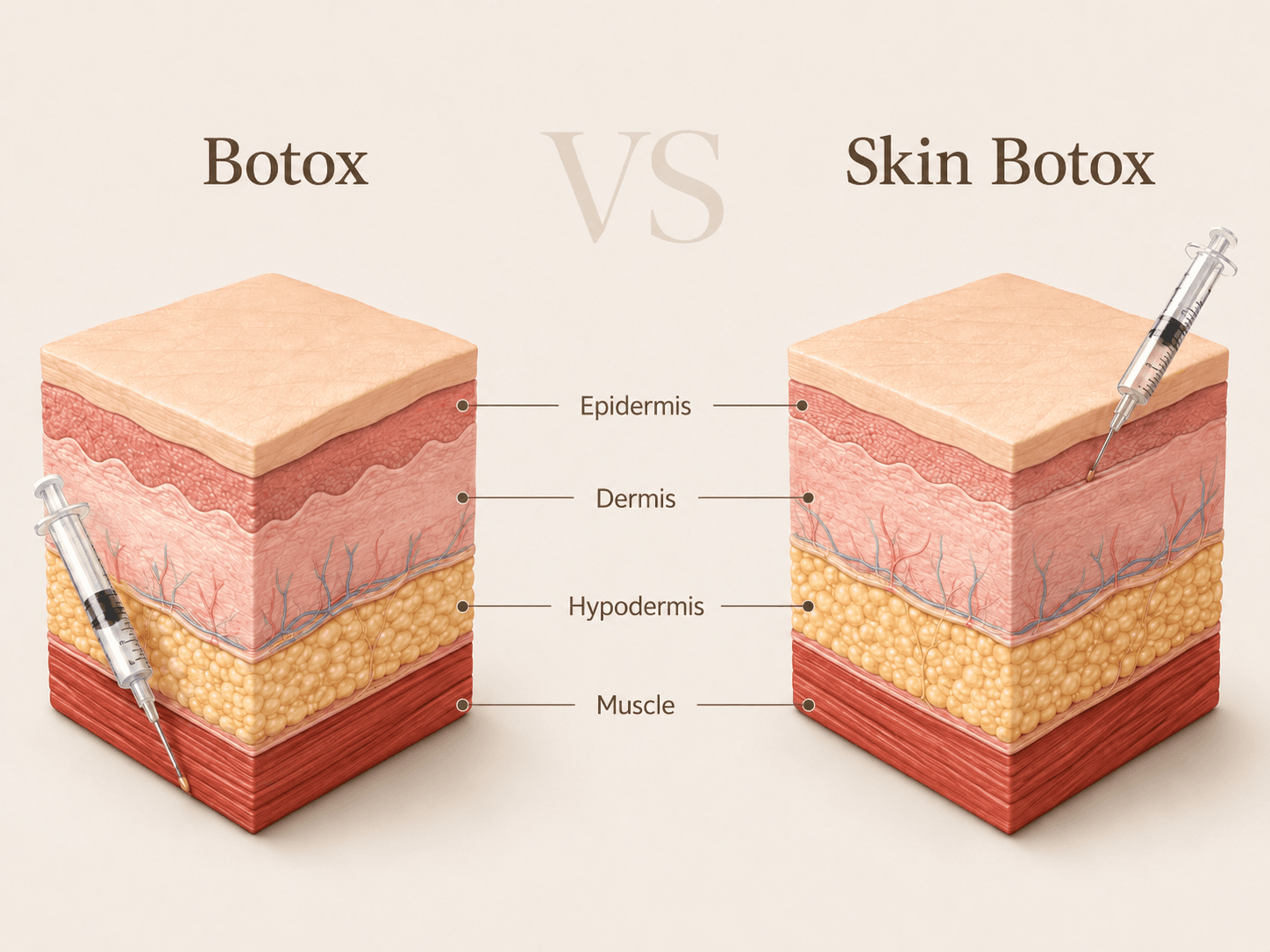 Is Skin Botox Actually Botox? The Superficial Micro-Injection Secret to Glass Skin (Without the Frozen Face) — A Myeongdong, Seoul Guide (2026)→
 Lifting Treatments in Seoul, Gangnam: The Full Device Cheat Sheet Beyond Ultherapy and Thermage (2026 Guide)→
 Medical Tax Refund for Foreigners in Korea: What Changed and What Didn't (2026 Guide)→